Plane
Open-source tracking for issues, sprint cycles, and roadmaps, self-hosted or in the cloud
- Category
- Web platforms & developer tools
- Best-fit role
- Kubernetes deployment engineer DX study
- Focus
- Kubernetes deployment REST API integrations Developer docs
- Links
- plane.so docs.plane.so
The product
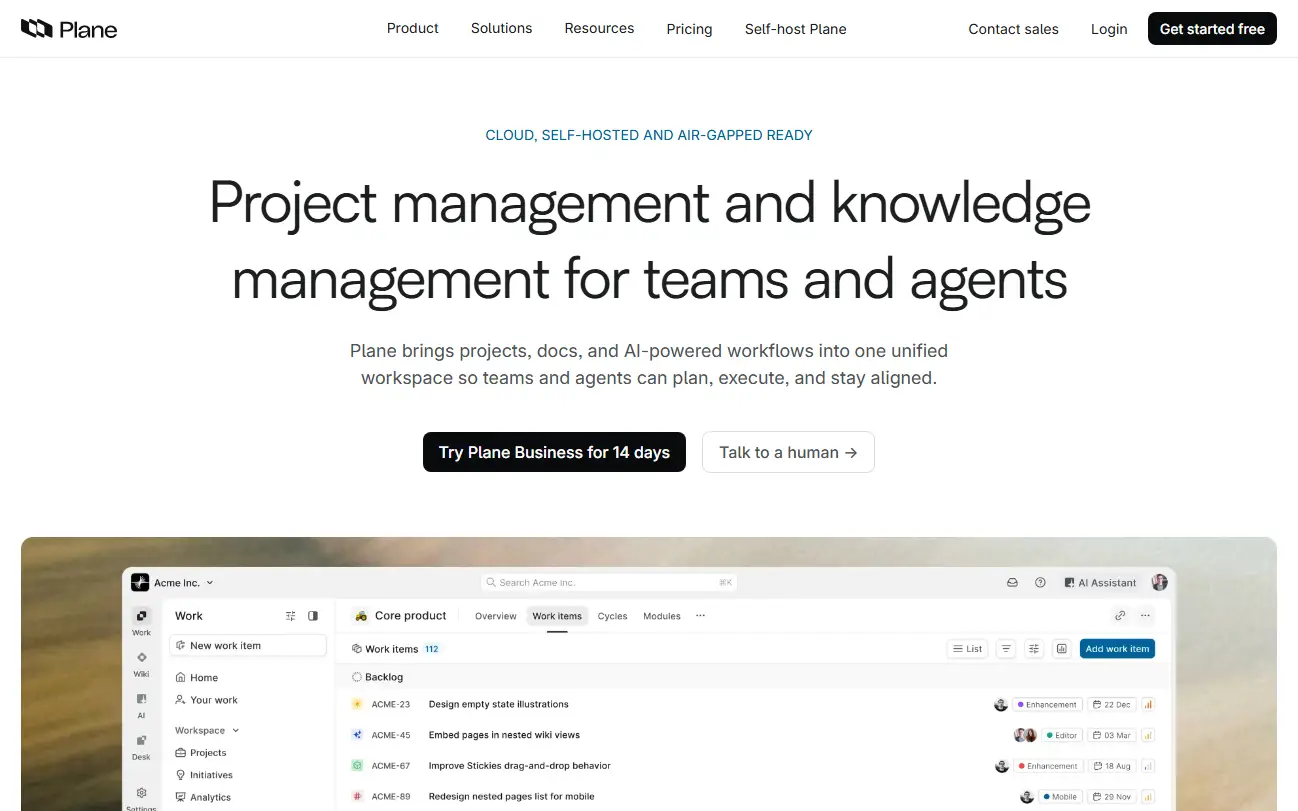
Plane is an open-source project management tool, pitched as an alternative to Jira and Linear. Teams use it to track issues, run sprint cycles, and manage product roadmaps. It also includes modules, custom views, analytics, and Pages, a rich-text editor with AI features. It is built with React Router, Django, and Node.js. Teams can self-host it with Docker or Kubernetes, or use Plane Cloud.
The developer problem
For a tool that teams can self-host, the install path is part of the product. A team running Plane on its own infrastructure takes on the whole stack Plane is built on (React Router, Django, and Node.js), deployed with Docker or Kubernetes and kept upgradeable from one release to the next. Each gap in the deployment steps becomes a support question from someone halfway through an install. The REST API faces the same test from the other side: an integration holds up only when the docs describe the API that is actually running.
My focus
- Kubernetes deployment. I’d start by installing Plane on a clean cluster exactly as the docs describe, then propose fixes for any prerequisite or default the steps leave out.
- REST API integrations. My focus would be small integrations against the REST API, each paired with a guide that a developer can run end to end without reading the source.
- Developer docs. I’d map the self-hosting and API docs against each release, so an admin on an older install can still find the upgrade steps that apply to them.
- Product features. I’d look for small features in React on the front end or Python on the backend, where the code change and its docs can land in the same pull request.
Why it fits my experience
- At Red Hat I led documentation for Migration Solutions, supporting container, application, and virtual machine migrations onto Red Hat OpenShift, for an audience almost always under time pressure with a production workload at stake. I installed and migrated the products being documented rather than relying on an engineering walkthrough, which consistently surfaced steps missing from the official procedures.
- At Mitutoyo I built the installer and update mechanism, and supported deployments on locked-down manufacturing networks with no outbound internet access.
- At Meta I partner with SDK engineers through the release cycle, reviewing API changes early enough that breaking changes ship with migration guidance instead of a support thread. I also maintain versioned documentation across concurrent SDK versions, including deprecation notices and upgrade paths for developers who cannot move to the latest release immediately.
Screens · 03
- View larger:
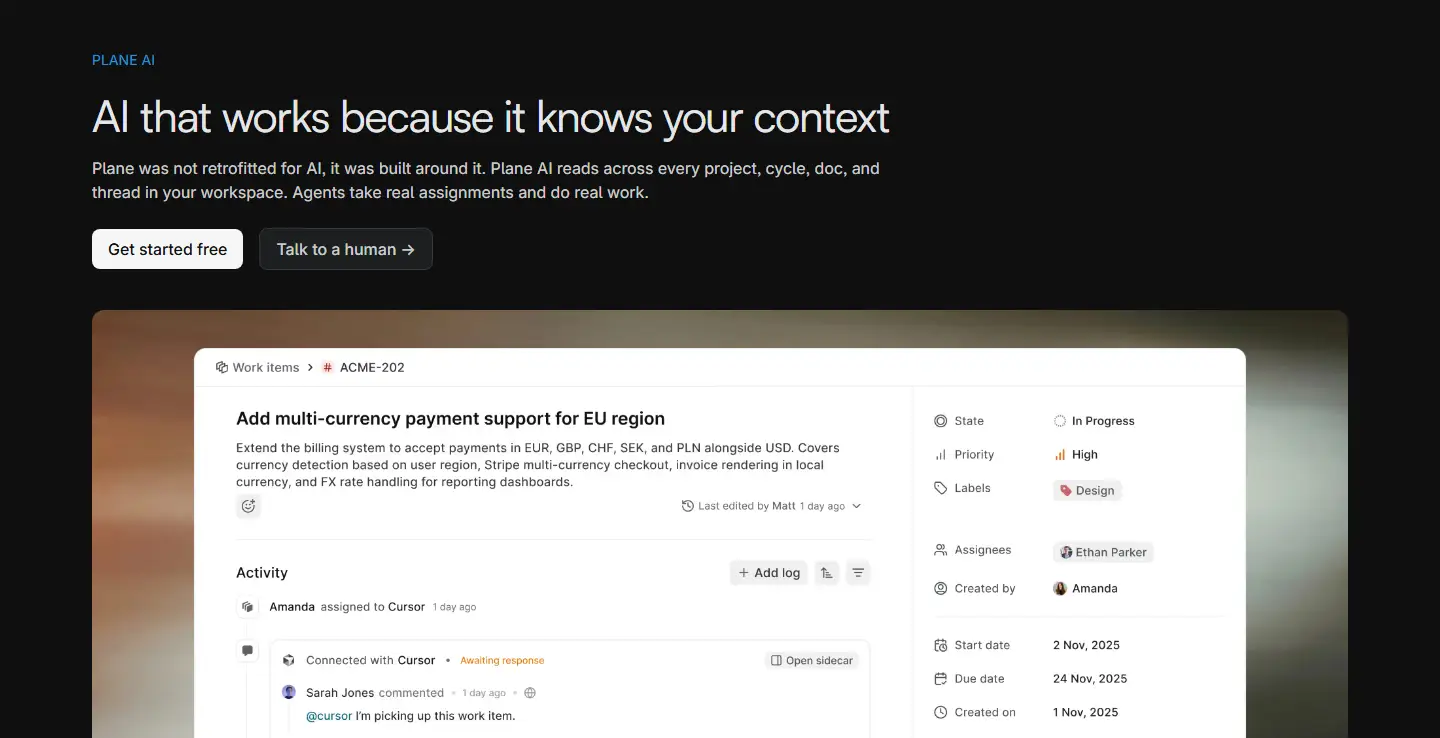
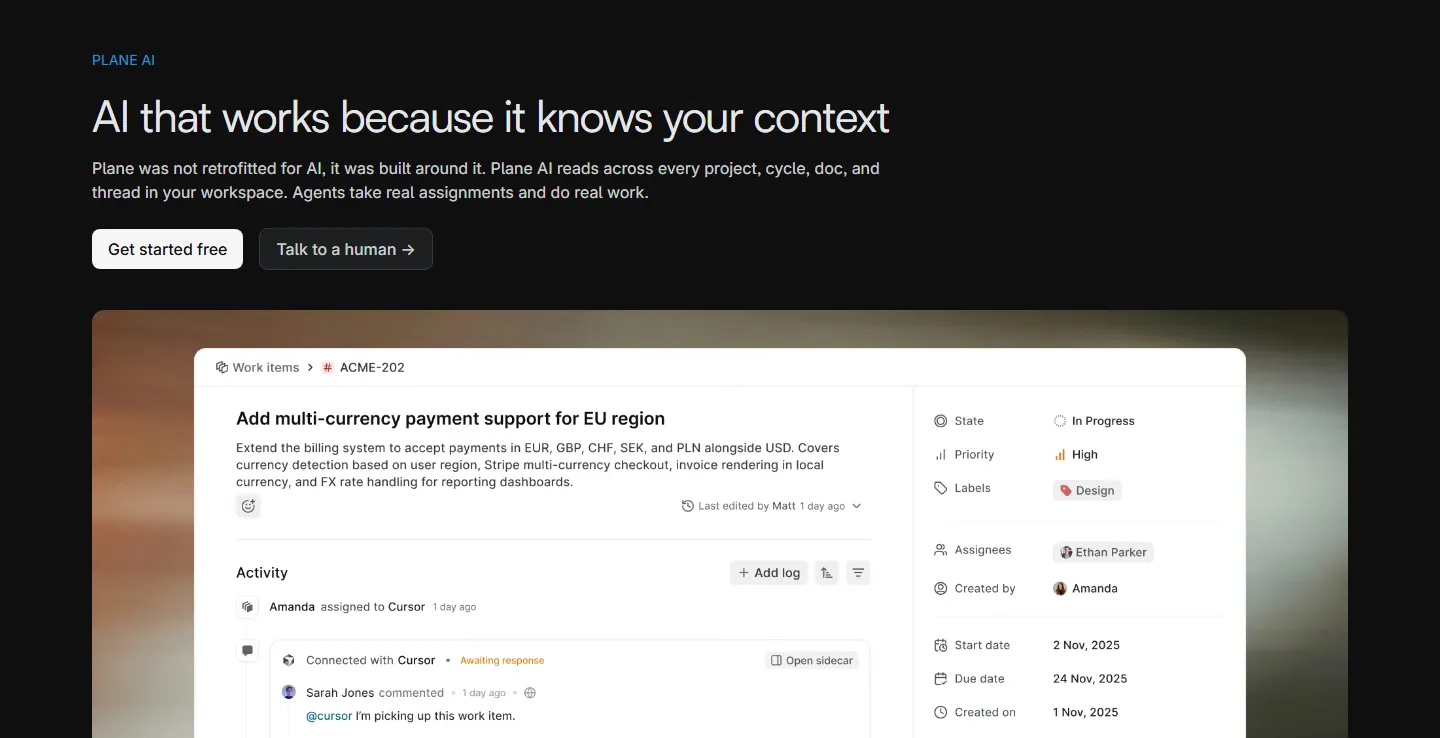
FIG 09.2 Plane AI section of the home page, with a work item, its activity thread, and its properties · plane.so - View larger:
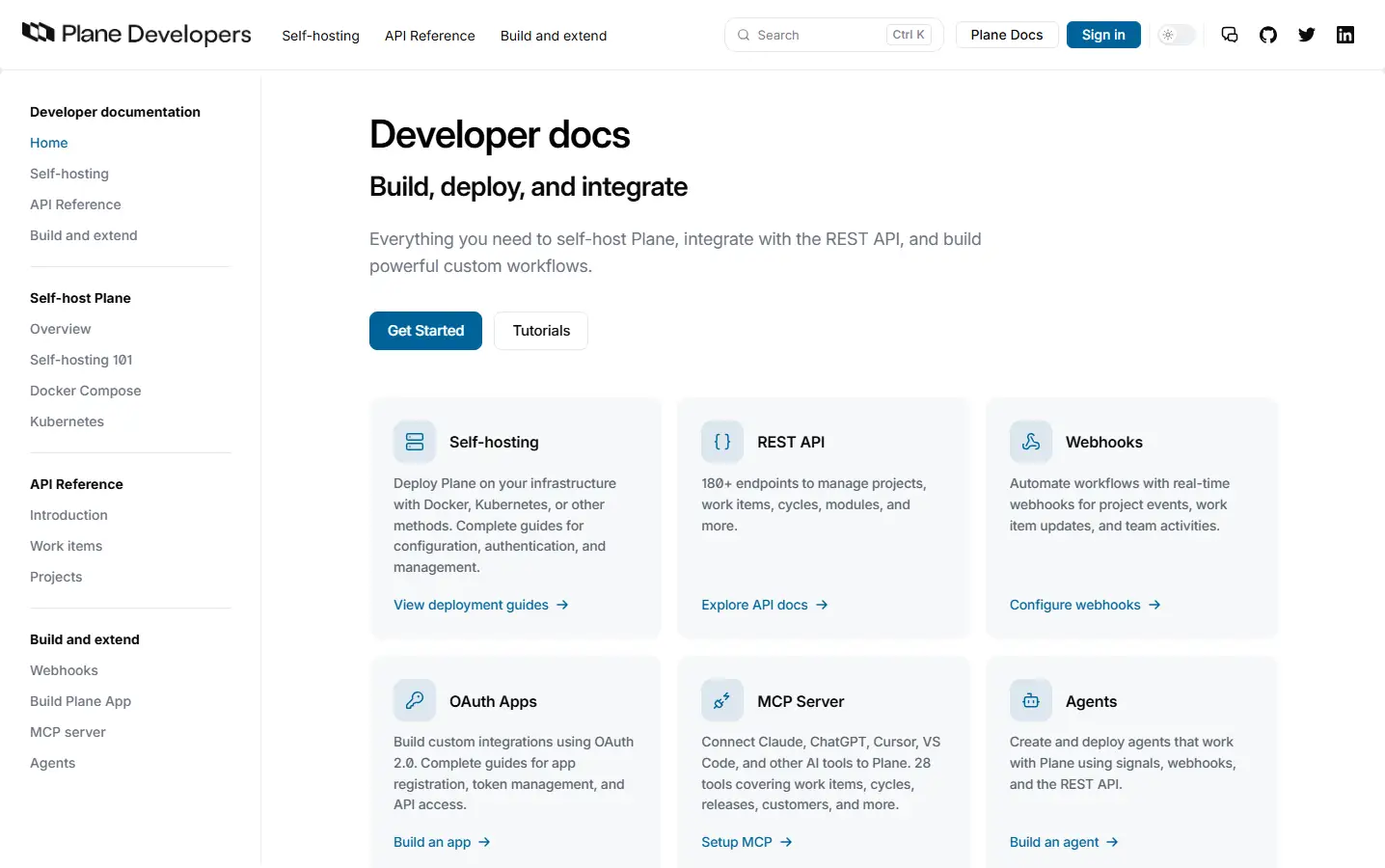
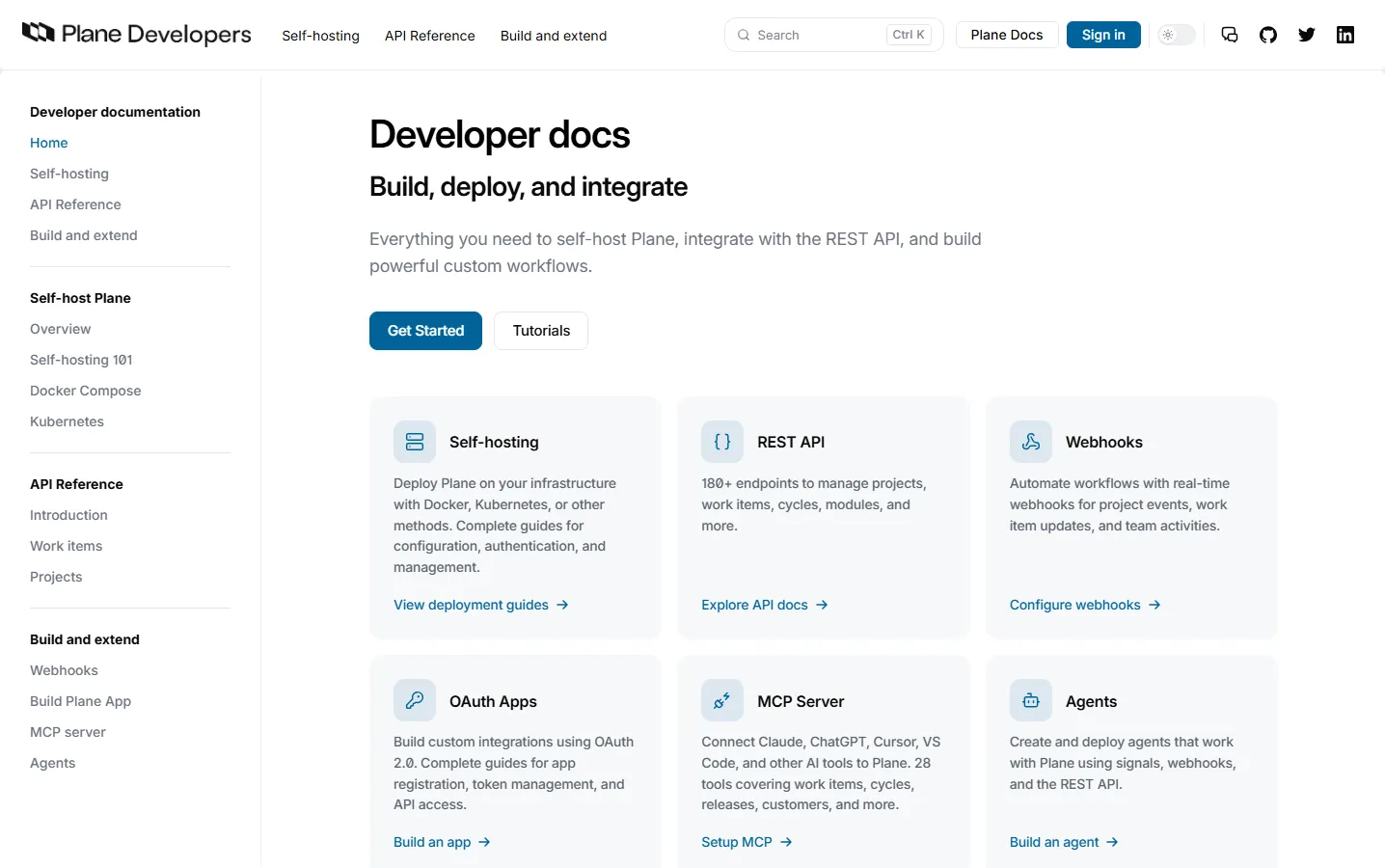
FIG 09.3 Plane developer docs home, linking self-hosting, REST API, webhook, and MCP server guides · developers.plane.so - View larger:
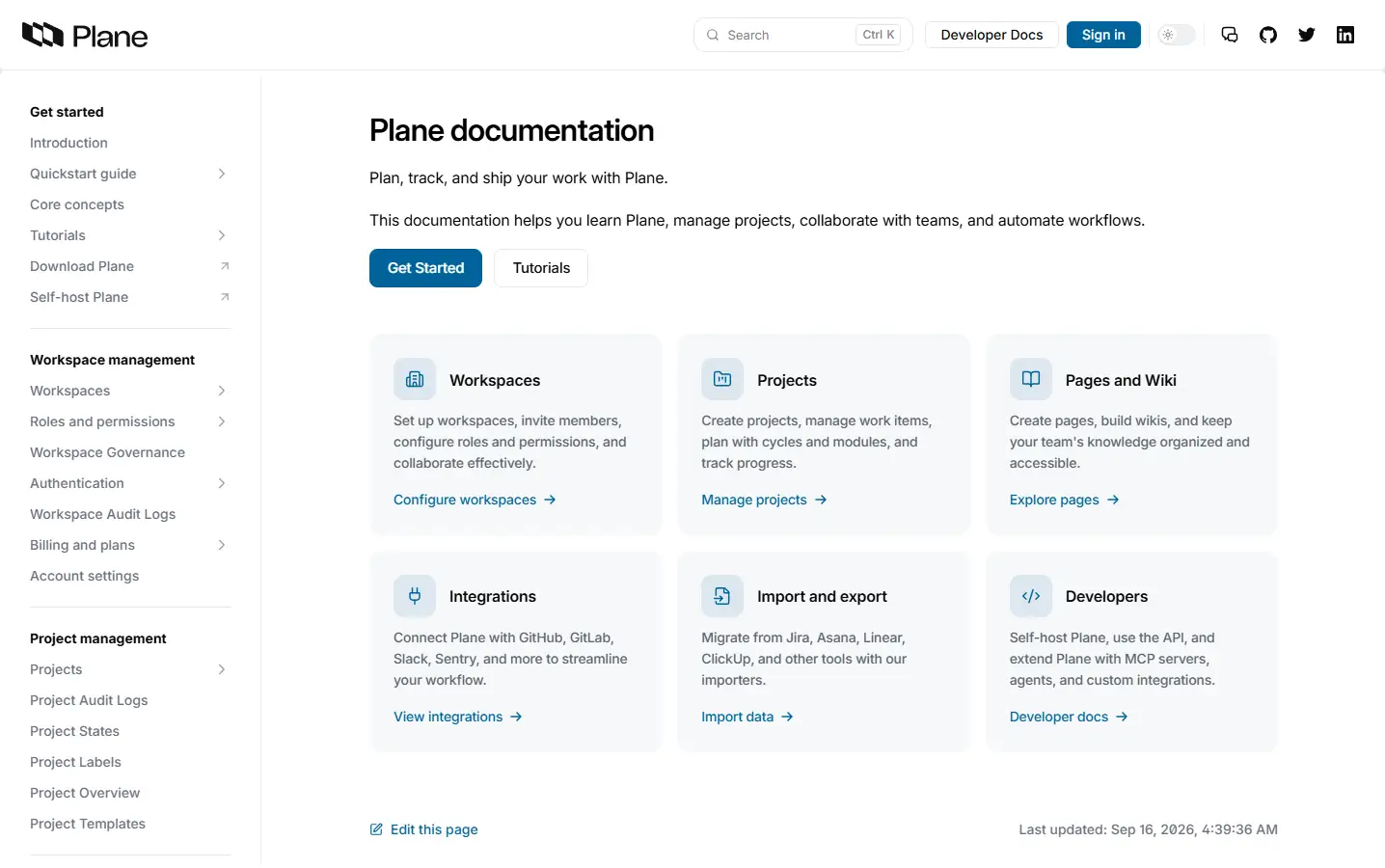
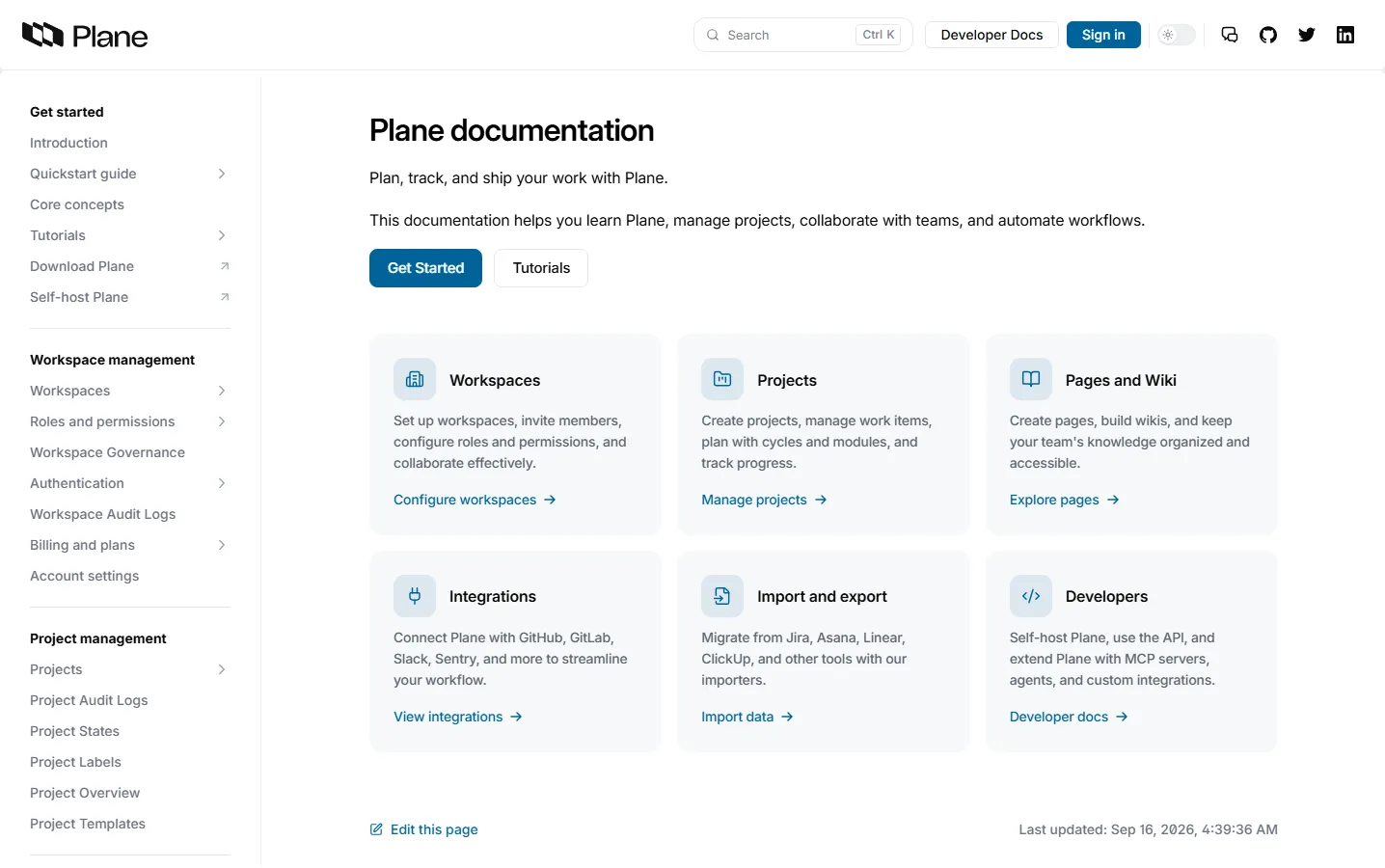
FIG 09.4 Plane documentation home, with topic cards for workspaces, projects, pages, and integrations · docs.plane.so
Screenshots of the public plane.so site. Plane and its marks belong to their owners; shown to identify the product. No affiliation or endorsement is implied.